Omegle, the Random Video Chat Site that Defined the 2010s

Remember Omegle?
Picture it. It's a Friday night in 2014. Your homework is either done or ignored and there's an unhealthy amount of pizza on the table. One of your friends blurts out that the group should chat with strangers on the biggest online phenomenon, Omegle! Within seconds, you are transported from your snowy house in Montana to a tropical beach house in San Juan, looking at a new friendly face.
For those not fortunate enough to cross paths with this site in its heyday, you missed out. You never knew who you'd chat with that night. The first random connection may have been with a cute girl in Germany who shared your love for pop culture. Next, you may have a ten second chat with an old man who is struggling to figure out his webcam while fidgeting with his dentures. Laughing with complete strangers for hours was typical of a random video chat session.
One of the greatest features about Omegle was how private it felt. Traditional social media platforms require you to fill in a lot of information and upload a profile picture to use it. People were drawn to the anonymity of Omegle. All you had to do was visit the site and jump right into anonymous text or video chats. Meeting new friends and finding romance was only a click away.
As much of a global hit Omegle was, its popularity and ability to remain nameless meant that everyone was flocking to the service. That unfortunately included people with bad intentions. That brings us to the darker side of the late Omegle.
Why It Shut Down
Leif K-Brooks, founder of Omegle, decided to shut down the site in November 2023 because he had reached his breaking point; it no longer made sense financially and psychologically to keep the platform running. Omegle had faced criticism for years about its lack of proper moderation. While there were plenty of positive matches, as the platform grew, more and more people were also using it nefariously. Inappropriate content like self harm, sexual content and blackmail ran rampant. What once was fun became more uncomfortable as the platform grew. Moderation teams did their best, but could not keep up with the growing demand.
The straw that broke the camel's back was the accusation that Omegle was designed ineffectively to protect children from predators. In 2021, the “A.M.” lawsuit was filed by Alice, a survivor who at the age of 11 was matched with a predator. The legal team claimed that the lack of safety guardrails made Omegle too dangerous. This led to K-Brooks settling the multi-million dollar lawsuit out of court and closing the doors on Omegle forever.
The shutdown of Omegle left a vacuum on the internet. Millions of people didn't decide they were done with spontaneous conversations; they just lost the place where they had them. Randomly chatting with new people around the world was so much fun. Was there a way to keep that same spontaneity without crossing the line?
Why Millions Still Search for Omegle?
Omegle introduced the world to so many possibilities about where we could go. Meeting someone outside of our normal social circle was not only exhilarating, but refreshing. Typical social media platforms show you the same people and opinions that you always do. You wouldn't get on your Facebook and invite total strangers into your world. Sending a friend request to someone across the world is asking for trouble. You are letting people you don't know into your life. Details like your job, routine, and where you live are all things that should remain private.
With random chats, we have the freedom to interact with others outside of our circle. Services like Omegle offer something social media can't: unpredictability. You aren't stuck swiping through an algorithm designed to keep you scrolling. You're meeting a real person with a different background, culture, or perspective. The conversation may only last thirty seconds, but sometimes you are hooked for much longer. That mystery is what keeps people coming back.

What Modern Random Chat Apps Learned
If the concept of random video chats was going to survive into the future, Omegle-like platforms would need to evolve. K-Brooks proved that people craved spontaneous interactions with new people, but the fall of his platform also proved that element alone is not enough. The next generation of random video chats would need to find a better balance between fun and responsibility.
More of an emphasis would need to be placed on safety. Users need far more control than they had before. The industry learned:
- Safety should be proactive, not reactive. Modern platforms use automated AI-detection, user reporting, spam prevention, and human moderation to identify rule-breaking behavior more quickly.
- Not everyone wants to start on camera. Random video and text chat options let people connect in whichever way feels most comfortable.
- Shared interests lead to better conversations. Interest-based matching helps people connect over gaming, music, travel, languages, and other hobbies.
- Users want more control. Location and preference filters, easy skipping, and reporting tools put users in the driver's seat.
The winning recipe is not reinventing the wheel. Random chat works. The formula needed to be refined to include more of an emphasis on smart tools, user control and safety.
What to Look for Today?
While the shutdown of Omegle was unfortunate, many alternatives have emerged to take its place and fill the demand. How do you know which one is worth your time?
Today, users want conversations without algorithms, to meet strangers outside of their bubble, to practice a new language, and to enjoy spontaneous chats with strangers. Nothing is more alluring than the mystery of it all; who will you chat with next?
When choosing an Omegle alternative, look for a platform that offers:
- Random video and text chat so you can connect to strangers your way.
- Interest-based matching to spark better conversations and make initial contact less awkward.
- Strong moderation and reporting tools to help protect users from bad actors.
- Fast, simple onboarding so you can jump into the action quickly.
- Browser and mobile support so you can join conversations wherever you are.
Random video calls are so magical because you have the ability to have genuine conversations with new people you would never meet otherwise. It is essential to find a platform that captures that same formula while offering better user control. So which site or app should you use to meet new people and share good vibes?
Where Thundr Fits
Since 2024, Thundr has emerged as one of the strongest Omegle successors that preserves the art of meeting strangers; it offers more control, stronger moderation and a growing community. Choose between video or text chat, add interests, and use preference filters for gender and location. Featured Filters also let you customize the background and overlays of your camera view.
Thundr puts a big emphasis on keeping our community safe. We combine early AI-detection software, human moderation, and an easy reporting system to help weed out inappropriate content. For a comprehensive overview, visit Thundr's safety page.
In 2026, Thundr forecasted a storm when it announced the launch of its Google Play Store app. The app makes it easier to meet strangers no matter where you are.
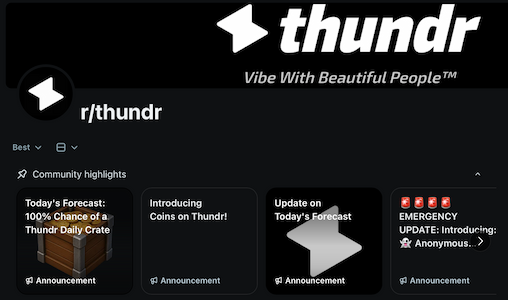
What makes Thundr most different is our dedication to its community. The team monitors our Reddit and Discord daily. For official requests, visit our support page.
To learn more about how Thundr stacks up against the past, visit the Omegle vs. Thundr comparison page.
The Spirit of Omegle Lives On
Since the dawn of the internet, people have yearned to make connections with people across the digital realm. From AOL chatrooms, to Omegle, and now to modern random chat platforms, the human need to have meaningful conversations with others continues to strike. Omegle may be gone, but its spirit lives on through the best alternative site to chat with strangers, Thundr. What are you waiting for? Create an electrifying boom and vibe with beautiful people now.